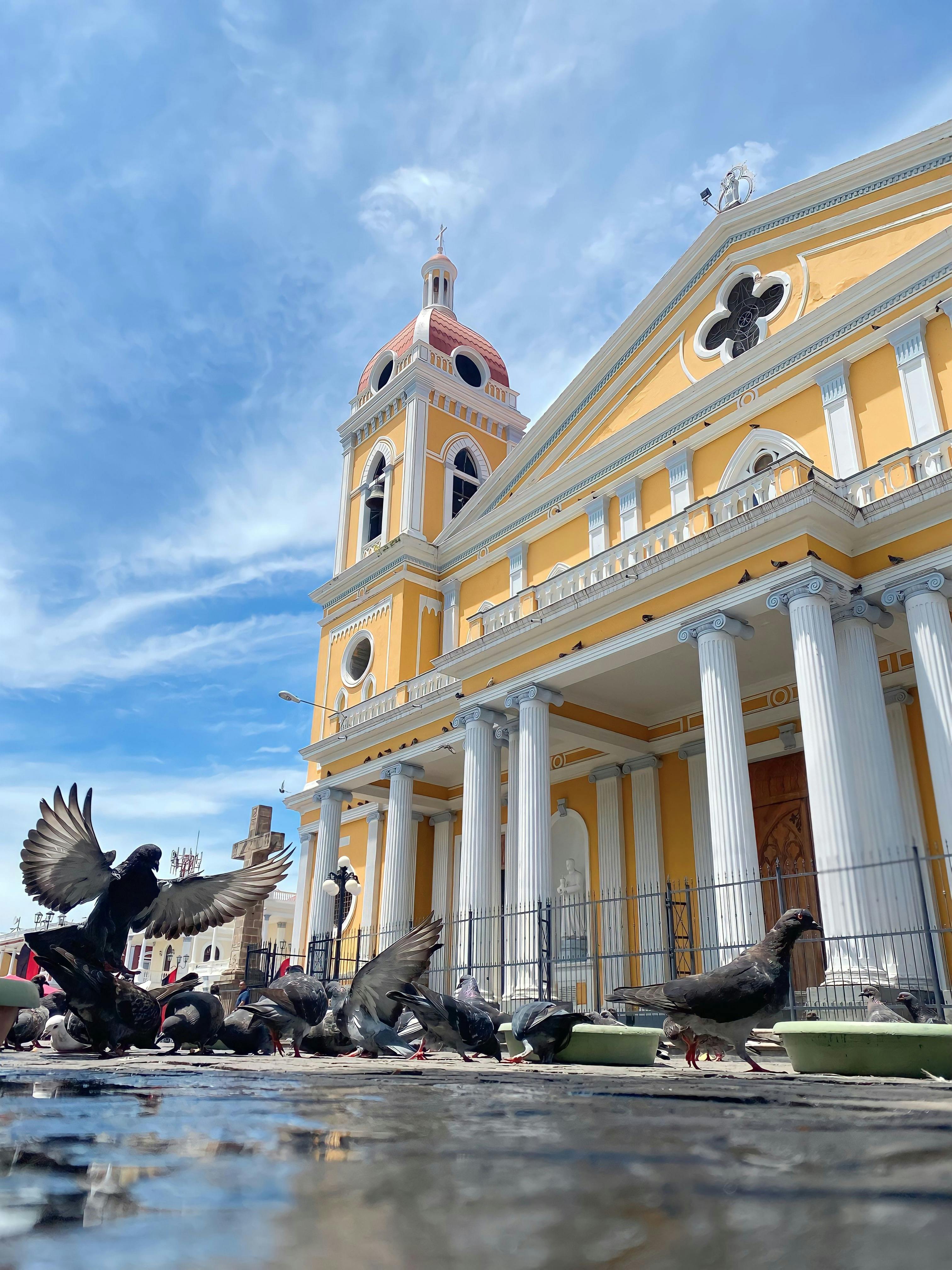
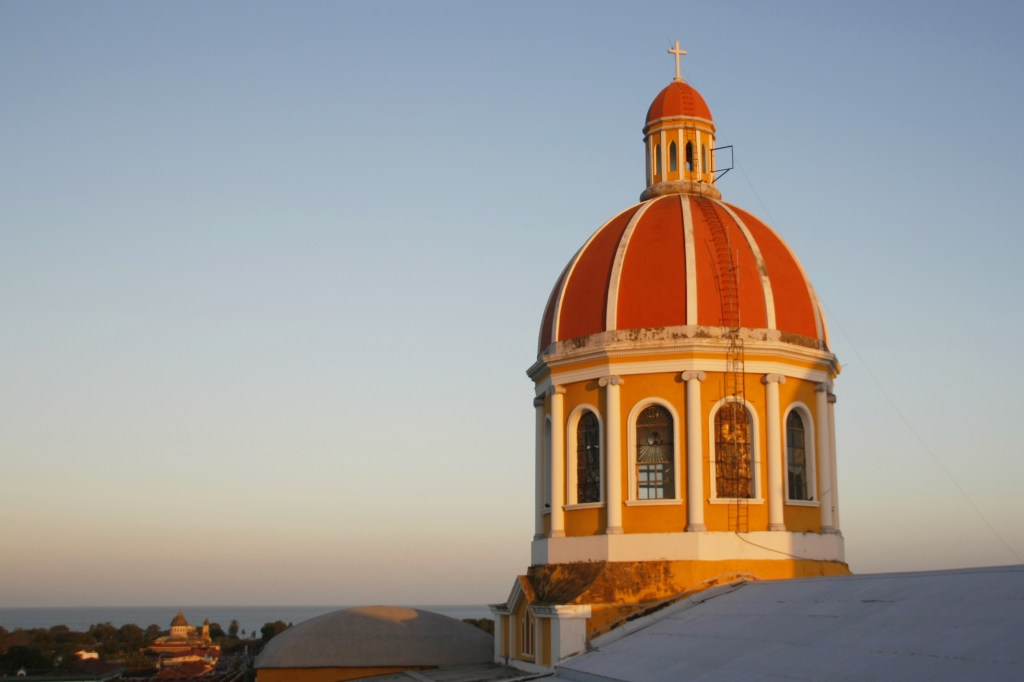
Our Lady of the Assumption Cathedral, Granada
Granada, known as La Grande Sultana, was established in 1524 by the Spanish explorer Francisco Hernandez de Cordóbas. The city was designed to serve as a central hub for the region and is recognized as one of the oldest colonial cities in Nicaragua, alongside León, as well as one of the earliest cities on the American continent.
The name Granada was derived from a Spanish city and was part of the vast Iberian Catholic kingdom. More than merely a Spanish conquest or colony, Granada was officially recorded in the Spanish registers of the Crown of Aragon and Castile.
Historically, Granada is considered the “sister” city of Antigua in Guatemala. During its early years, the city thrived with a vibrant trade, facilitated by its access to the ocean through the lake. The terms prosperity and integration with the indigenous population aptly describe this Spanish settlement.
However, the city’s history is marked by numerous challenges. Granada’s wealth attracted not only settlers and conquistadors but also pirates and privateers sent by rival European powers. The accessibility of the San Juan River on the Caribbean side allowed these marauders to navigate upstream and confront the initial forts that safeguarded access to Granada.
One cannot overlook the tale of the American adventurer William Walker, who harboured grand ambitions of unifying Central America and claiming it as his own territory. Incredibly, Walker was frequently based in Granada. Following Nicaragua’s independence in 1821, specifically in 1856, the city had become a desolate site. The arrival of diseases brought by travellers devastated the mixed-race community and the remnants of the Spanish colony. The misguided freebooter ordered the city’s abandonment and destruction, sending mercenaries and outlaws to carry out his orders. Half of Granada was consumed by flames, forcing many inhabitants to flee to Ometepe, among other places. The arsonists left behind a grim inscription: “here was Granada.”
Granada
Granada, known as La Grande Sultana, was established in 1524 by the Spanish explorer Francisco Hernandez de Cordóbas. The city was designed to serve as a central hub for the region and is recognized as one of the oldest colonial cities in Nicaragua, alongside León, as well as one of the earliest cities on the American continent.
The name Granada was derived from a Spanish city and was part of the vast Iberian Catholic kingdom. More than merely a Spanish conquest or colony, Granada was officially recorded in the Spanish registers of the Crown of Aragon and Castile.
Historically, Granada is considered the “sister” city of Antigua in Guatemala. During its early years, the city thrived with a vibrant trade, facilitated by its access to the ocean through the lake. The terms prosperity and integration with the indigenous population aptly describe this Spanish settlement.
However, the city’s history is marked by numerous challenges. Granada’s wealth attracted not only settlers and conquistadors but also pirates and privateers sent by rival European powers. The accessibility of the San Juan River on the Caribbean side allowed these marauders to navigate upstream and confront the initial forts that safeguarded access to Granada.
One cannot overlook the tale of the American adventurer William Walker, who harboured grand ambitions of unifying Central America and claiming it as his own territory. Incredibly, Walker was frequently based in Granada. Following Nicaragua’s independence in 1821, specifically in 1856, the city had become a desolate site. The arrival of diseases brought by travellers devastated the mixed-race community and the remnants of the Spanish colony. The misguided freebooter ordered the city’s abandonment and destruction, sending mercenaries and outlaws to carry out his orders. Half of Granada was consumed by flames, forcing many inhabitants to flee to Ometepe, among other places. The arsonists left behind a grim inscription: “here was Granada.”
Granada continues to be recognized as the Great Sultana, engaged in a historical rivalry with its neighbour León for the title of the nation’s capital. The conservatives favoured Granada, while the liberals aligned themselves with León, situated further to the north. Ultimately, in 1858, the decision was made to designate Managua as the capital, thereby resolving the disputes between these two colonial cities.
Despite this resolution, Granada remained a focal point of conflict during Nicaragua’s tumultuous period in the latter half of the 20th century, although it experienced relative tranquility during the Sandinista revolution of the 1970s and 1980s.
 White Panther